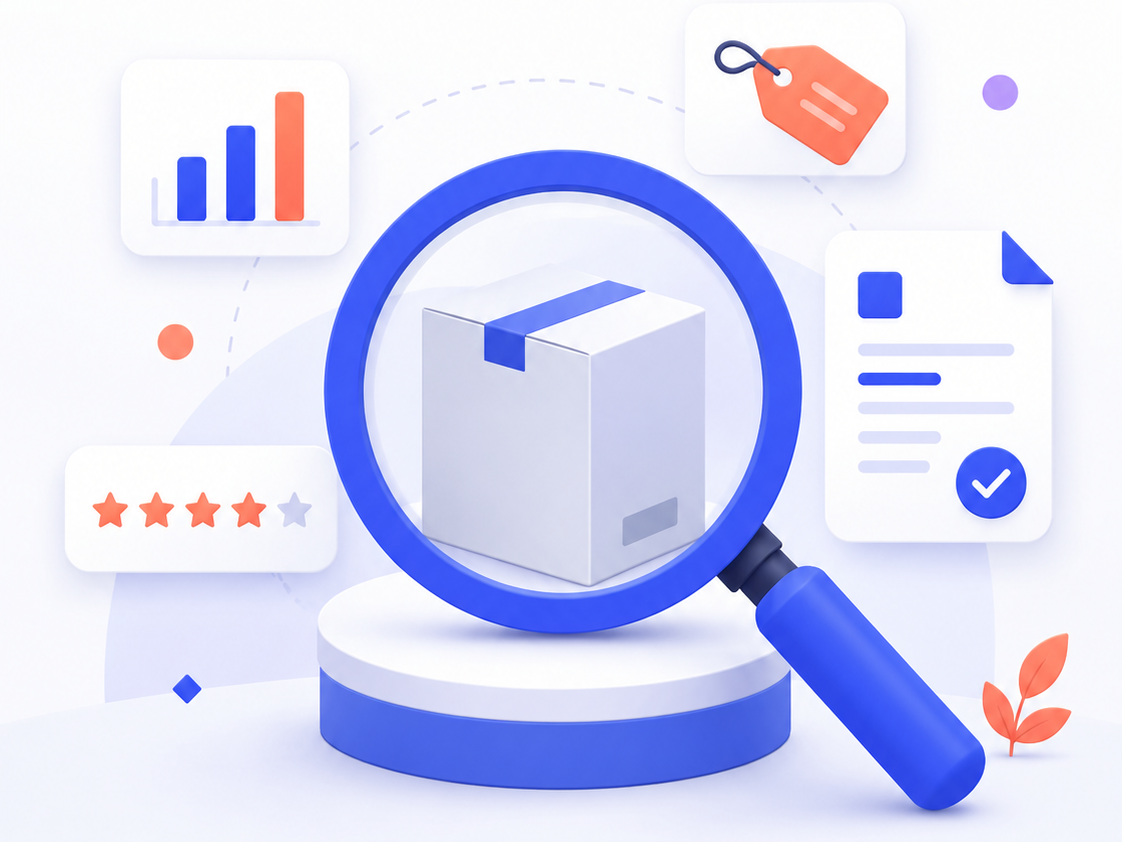
Amazon Wholesale is sometimes described as if it were almost a vending machine: find a product, jump onto the listing, send a few boxes to a warehouse, and somewhere across the country, the dollars start dripping in.
Sounds nice.
But any business that sounds that smooth is usually hiding a few sharp edges. Wholesale has them too: competition, paperwork, suppliers, fees, brand restrictions, pricing, turnover, and returns. None of this is terrifying. You just need to see it before you buy inventory, not after the product is already sitting in a warehouse, silently judging you from a pallet.
Let’s strip away the motivational foam. Myth by myth.
Myth 1. “There’s No Competition in Wholesale”
There is.
It just does not look like the competition you face when launching your own product.
When you build a private-label brand, you have to fight for customer attention from scratch: explain what the brand is, why the product is good, why there are barely any reviews yet, why the price makes sense, and why a shopper should take a chance on you in the first place.
Wholesale is different. The product already exists. The listing is already there. The customer has already landed on the page. The product may already have reviews, a rating, photos, and sales history. In other words, you do not have to grow demand from zero like some fussy little houseplant on a windowsill.
But it is too early to relax.
On a product detail page, Amazon shows customers one main offer next to the Add to Cart and Buy Now buttons. Many sellers still call it the Buy Box; officially, Amazon calls it the Featured Offer. And that is where sellers compete: on price, inventory availability, delivery speed, fulfillment method, account health, customer experience, and other factors.
So “there is no competition” sounds pleasant, but it is wrong.
A more accurate way to put it is this: in Wholesale, you are not competing to create demand. You are competing for access to demand that already exists.
That is a very different game.
Myth 2. “If There’s MAP, Nobody Will Drop the Price”
MAP is useful. But it is not magic.
MAP, or Minimum Advertised Price, is the lowest advertised price at which authorized sellers are allowed to publicly list a product. If a brand actually enforces its pricing policy, the market becomes calmer: less undercutting, fewer pointless price wars, fewer situations where sellers collectively shave the margin down until it looks like a wet napkin.
But there is a catch. Of course there is.
With one brand, MAP enforcement may be strict: violate it once, get a warning; do it again, lose access to supply. With another brand, MAP exists mostly “for order’s sake,” tucked away in an old PDF named something like Brand Policy Final FINAL v3.
And that is about it.
So MAP is a good signal, but it is not a profit guarantee. Before buying inventory, you still need to look at the real Amazon price, price history, number of sellers, presence of FBA offers, and what is left after all expenses.
Otherwise, you may buy a product under the illusion of a protected price, only to discover that the market has its own plans.
Annoying? Yes.
Does it happen? Also yes.
Myth 3. “The Main Thing Is Finding a Profitable Product”
Not exactly.
The product matters, of course. But in Wholesale, the source of supply matters just as much. Sometimes more.
You can find what looks like a perfect listing: demand is there, the price looks attractive, there are not too many sellers, and the margin is smiling at you on paper. Then you discover there is no reliable supplier. Or the supplier will not provide proper documents. Or the brand does not allow Amazon resale. Or the product is only available through retail channels, which puts you in a very different risk zone.
Amazon may ask for product documentation. Invoices, supplier information, proof of origin, sometimes a brand authorization letter. If you cannot provide solid documentation, that “profitable product” quickly turns into a problem.
So Wholesale does not start with the question, “How much can I make?”
It starts with a different one:
“Can I legally buy this exact product, in this exact configuration, from a supplier whose paperwork can withstand review?”
A boring question.
A money-saving one.
Myth 4. “FBA Means Amazon Does Everything for You”
Not everything.
Fulfillment by Amazon does remove a large part of the operational burden. You send products into Amazon’s fulfillment network, and Amazon stores the inventory, packs and ships orders, handles customer service, and processes returns. For a remote seller, that is a major advantage.
But FBA does not choose the product for you.
It does not check your margin.
It does not find your supplier.
It does not fix weak documentation.
It does not cancel storage fees.
It does not make an unprofitable product profitable.
Amazon handles fulfillment. Not thinking.
And that may be one of the most useful filters for a beginner. If the unit economics are bad, FBA will simply deliver your unprofitable product to the customer neatly and quickly. Excellent service. Sad result.
Myth 5. “A Big Market Will Bring the Money by Itself”
Amazon is huge. That is hard to argue with.
It is the largest player in U.S. ecommerce, and independent sellers account for more than 60% of sales in the Amazon store. According to Amazon, in 2024, independent sellers in the U.S. averaged more than $290,000 in annual sales, and more than 55,000 sellers exceeded $1 million in annual sales.
But here is where people often confuse two things.
Sales are not profit.
Revenue can look beautiful. Very beautiful, actually. But if your purchase cost is too high, fees are heavy, shipping eats the margin, the price drops, returns come in above expectations, and inventory sits longer than planned, that pretty revenue loses its shine fast.
A big market is an opportunity.
Not a guarantee.
The U.S. gives sellers massive demand, a strong habit of online shopping, developed logistics, and customer trust in Amazon. But money still appears only where the math works.
Not in the pitch deck.
Not in the dream.
In the spreadsheet.
Myth 6. “Wholesale Is Cheaper Than Private Label, So You Can Start Without Calculating”
No. Just no.
Wholesale often lets sellers test products in smaller quantities than launching a brand from scratch. You do not necessarily have to design packaging, pay for production, build a listing from zero, spend ad budget on the first clicks, and wait painfully for reviews.
But “lower upfront investment” does not mean “no calculations required.”
Sometimes a supplier has an MOQ. Sometimes a good wholesale price only appears at higher volume. Sometimes a product looks profitable until you add prep, shipping, referral fees, FBA fees, storage, returns, price drops, and a small allowance for human mistakes — because, let’s be honest, those will happen.
That is why before a test purchase, you need to calculate landed cost: the full cost of the product by the time it is ready to sell. Then Amazon fees. Then possible losses. Then net margin.
Only after that should you ask yourself: “Am I willing to put money behind this?”
If the answer is held together mostly by hope, close the tab and go make tea. Sometimes that is the most profitable decision of the day.
Myth 7. “Find One Product, and the Business Is Ready”
One product is not a business. It is dependency.
Today it sells well. Tomorrow new sellers arrive. A week later the brand changes its terms. A month later the price drops. Then Amazon changes a fee, or storage costs rise. Suddenly your “perfect product” is not so perfect anymore.
In Wholesale, it is healthier to think in terms of assortment.
One product is being tested.
A second goes into reorder.
A third gets removed from the watchlist.
A fourth sells slowly but steadily.
A fifth looks interesting but requires brand documentation.
That is how a product matrix gradually takes shape. Not romantic, but healthy.
The business becomes less about hunting for a “golden button” and more about building a repeatable process: find a product, check demand, verify the supplier, run the numbers, test, evaluate the result, scale or exit.
Then do it again.
So What Is Left of Amazon Wholesale?
Once you remove the shiny promises, what remains is a perfectly workable model.
Amazon Wholesale is not about guessing the next big hit, and it is not about flipping random discounted products. It is about working with existing demand, proper suppliers, documentation, analytics, margins, and disciplined purchasing.
Do not guess — verify.
Do not argue with the market — read its signals.
Do not buy because “it looks profitable” — calculate down to the last fee.
And yes, this model can be interesting for sellers who want to enter Amazon without creating their own brand, launching a listing from scratch, or spending large advertising budgets at the start. But it requires care. Amazon does not like chaos. Suppliers do not either. Money, by the way, does not like it much either.
In Part One, we will break down the practical mechanics: how to read a listing, what to look for in the seller landscape, why the Featured Offer matters more than it may seem, how FBA supports a remote selling model, and which documents you need before buying inventory — not after.
In Part Two, we will move into action: product sourcing, landed cost calculation, restriction checks, supplier conversations, test purchases, and the decision to scale a product or calmly walk away.